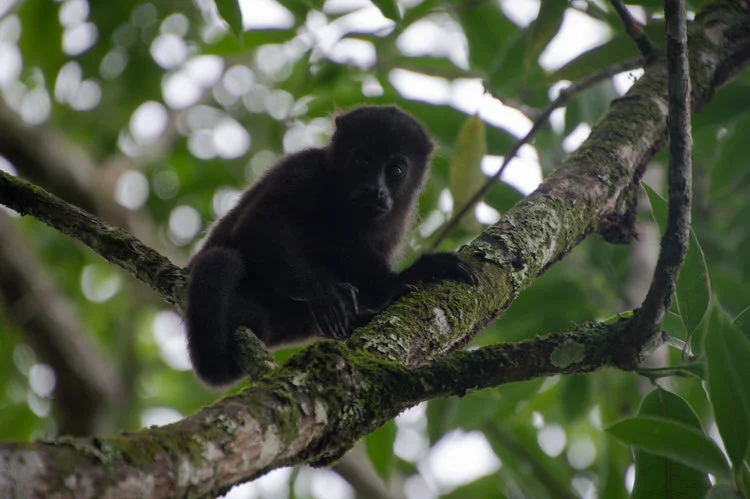
While I have been fortunate to work alongside dozens of communities in Peru within a community based conservation program, I have always been met with the challenge of not knowing enough Spanish to communicate effectively without the assistance of an interpreter. Due to Belize being an English speaking country, this barrier was non-existent, opening up conversations with the community members actively participating in conservation. During our visit to the Community Baboon Sanctuary, we were entertained by Creole riddles, fed delicious Belizean cuisine, treated to a tour of the sanctuary, amazed by foraging black howler monkeys, and accommodated by local families. Much of what we experienced is what draws tourists in, bringing economic opportunity to all the landowners participating in the sanctuary’s efforts. Whether you are interested in learning about the region’s natural history or interested in experiencing another culture, you can do this by arranging tours and/or accommodations at www.belizehowlermonkeys.org. All of these experiences from our visit to the Community Baboon Sanctuary left a lasting imprint in my mind that I hold dearly and I would highly recommend prospective tourists visiting Belize to consider a visit here.
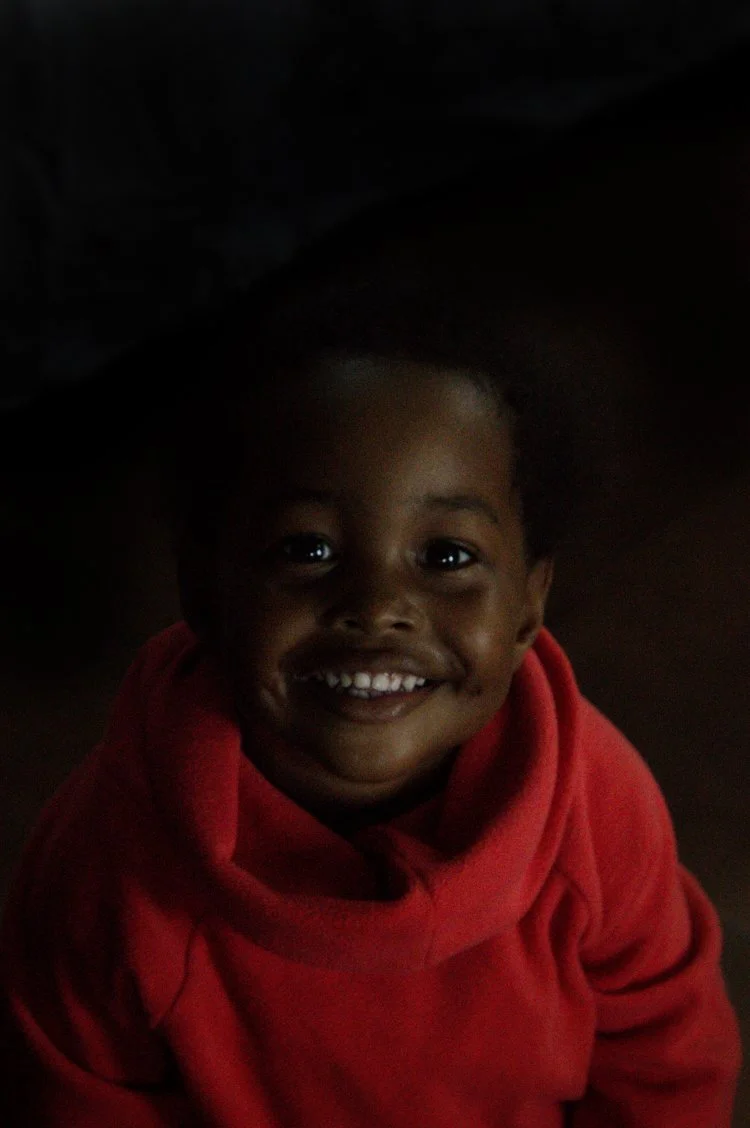
Arya winning the cutest kid in all of Belize contest.
While talking to Arya, the daughter of the sanctuary’s manager, Conway Young, I was able to teach her how to use my camera. As we began to scroll through our photos, we eventually cycled to my older photos where I had images of tapirs, monkeys, birds, and jaguars. Flipping to the jaguar made her wrap her arm around mine as she exclaimed, “That scares me!” It was an eye opening experience as I have always been enamored with big cats. To see real fear from this five year old was a glimpse into her reality of living in a landscape with a dangerous animal. Due to the Community Baboon Sanctuary effectively protecting their natural landscapes, the region acts as a corridor for jaguars to move through (Community Baboon Sanctuary, n.d.), potentially putting unguarded children in harm's way. Luckily, jaguar attacks on humans are very infrequent (Iserson & Francis, 2015). I asked Arya if she had any dogs at home and she responded yes. While I have no idea the effect I may have had on her, I told her to stay close to her family and her dogs as they will protect her and that the jaguar helps keep us safe from illness by eating old, injured, and sick animals. This made me think about the communities I work with along the Napo River in Peru. These communities are very secluded and are known to have jaguars in the region. Students often recite jaguars as being a favorite animals of theirs. This was a notable cultural difference but one worth respecting as the community members in Belize aren’t persecuting the big cats and are likely just protecting their children through storytelling. In effort to garner success, it is vital to work within a culture’s context as forcing opposing beliefs can create resistance to the larger conservation goal (Brooks et al., 2012). The Community Baboon Sanctuary appears to be doing this in stride and achieving success (Wyman, 2010).
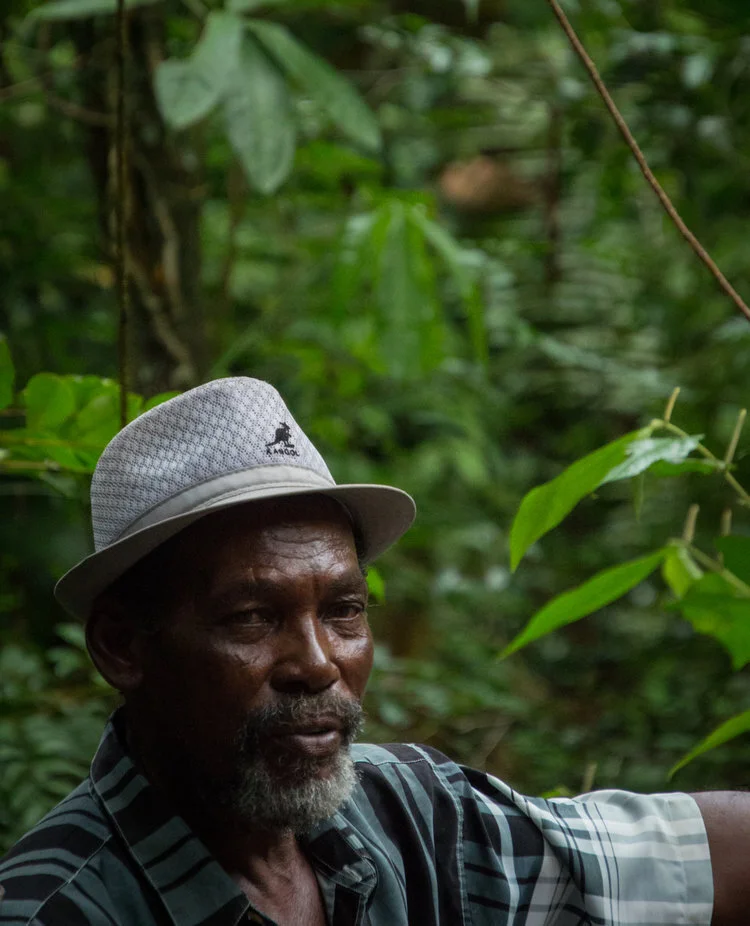
Robert wows Miami University GFP students with his natural history knowledge.
We later set out on a hike, guided by Robert Panting, a man of much wisdom and humor. His humor shined though by sharing a Creole tradition of challenging riddles with us. This was later topped by him sharing his knowledge of the Community Baboon Sanctuary’s wildlife and plantlife. It was fascinating learning the various uses of the cohune palm as well as the unique use of the incense-like pine needle smoked as cigarettes. This cultural exchange was a truly special opportunity to be a part of. Additionally, this exchange also gives the local community members a participating role in conservation, further building their capacities (Brooks et al., 2012). Hearing the passion Robert had for the forest and all its species made it clear his attitudes and behaviors deeply reflect the community based conservation minded goals of developing social capital in effort to preserve ecosystems (Conrad & Hilchey, 2010).
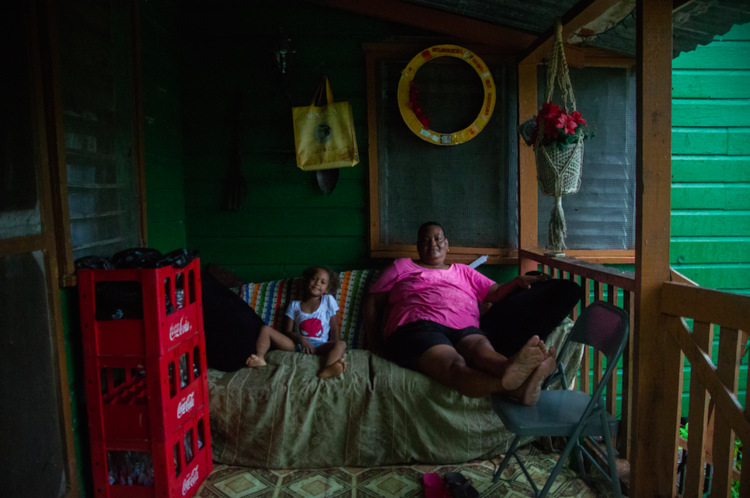
Dory sits with her Grandmother Dorla, Vice President of the Community Baboon Sanctuary.
The day capped off with a night’s stay at Dorla Rhaburn’s home which also serves as a bed and breakfast. Dorla is the Vice President of the Community Baboon Sanctuary Women’s Conservation Group and was recently awarded the Equator Prize in 2017 by the United Nations. This prize recognized the Community Baboon Sanctuary’s efforts into finding solutions to environmental and poverty related issues on an international stage while also providing financial support to advance sustainable development locally (Bernard & Young, 2017). Through Dorla and her colleague’s efforts and achievements, it is clear that the Community Baboon Sanctuary’s democratization of the environment has led to the empowerment of locals by developing social capital and building capacities within the community (Conrad & Hilchey, 2010). This in turn has motivated citizens to protect the ecosystem effectively and ultimately shows the importance of incorporating local communities into wildlife conservation (Wyman & Stein, 2010).
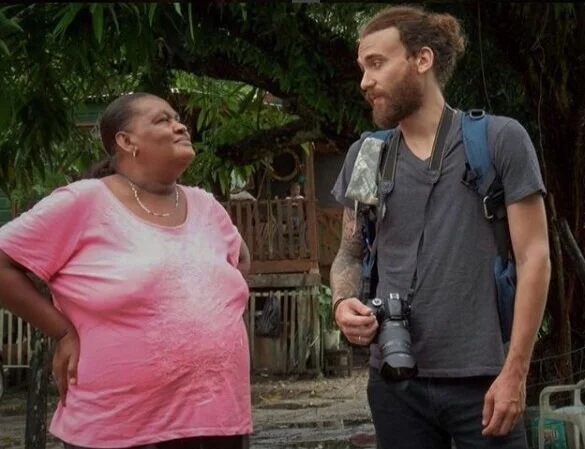
Dorla Rhaburn and Adam J. Dewey discuss the hard work she puts into the Community Baboon Sanctuary.
It was an honor to become one of this conservation hero’s “four new sons” as she took three fellow graduate students and myself in for a cultural exchange program. The night was full of family, food, and great conversation. A huge thanks to Dorla and her husband Reuben for making us feel like we just walked into our parents’ house, especially as I was battling the flu. I hope to see you again Dorla and eat all the fry jacks you’re willing to make us!
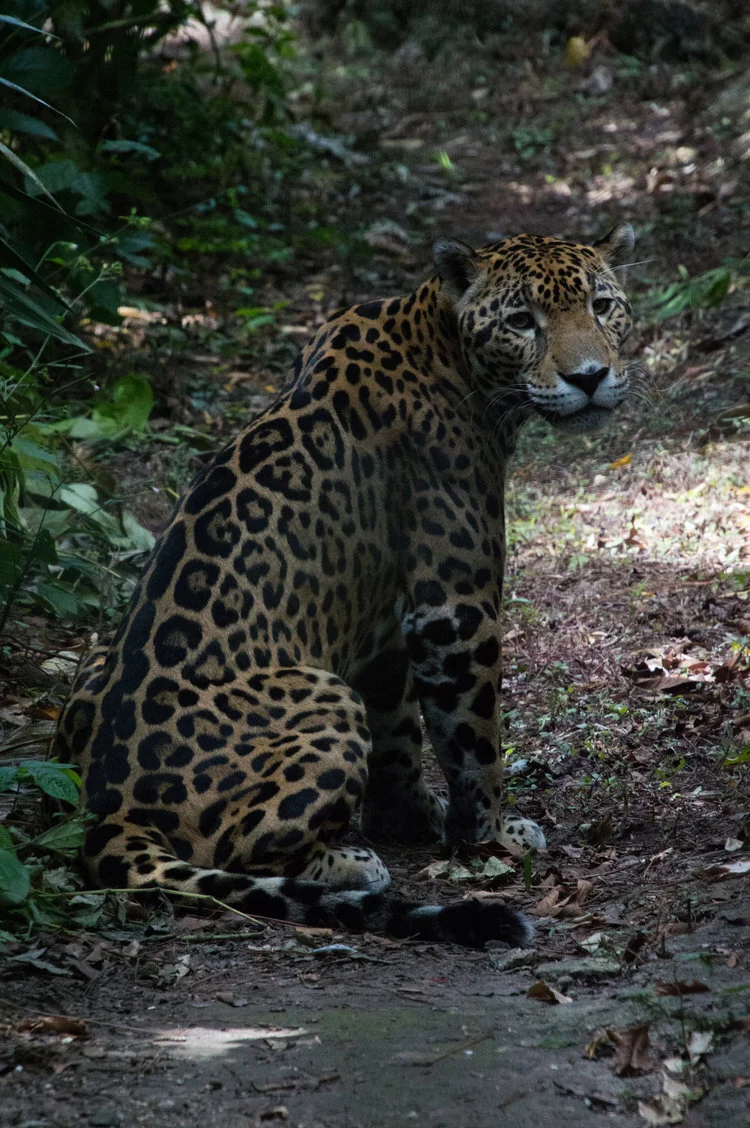
“A simple act of kindness and compassion towards a single animal may not mean anything to all creatures, but will mean everything to one.” - Paul Oxten
Through the multigenerational efforts by people like Arya, Robert, and Dorla, the Community Baboon Sanctuary is preserving habitat corridors for black howler monkeys and ultimately any wildlife in this region of Belize. When communities protect their green spaces, they create an avenue for wildlife and a sustainable future, for themselves and the wild animals they share their landscape with, even those that may frighten us.
- Adam J. Dewey, MA Biology, Miami University
Citations
Bernard, K. & Young, J. (2017). Community Baboon Sanctuary Women’s Conservation Group Awarded Equator Prize. United Nations Development Programme. Retrieved from: www.bz.undp.org/content/belize/en/home/presscenter/articles/2017/11/14/community-baboon-sanctuary-women-s-conservation-group-awarded-equator-prize.html
Brooks, J. S., Waylen, K. A., & Mulder, B. G. (2012). How National Context, Project Design, and Local Community Characteristics Influence Success in Community-Based Conservation Projects. Proceedings of the National Academy of Sciences of the United States of America, 109(52), 21265-21270.
Conrad, C. C., & Hilchey, K. G. (2010). A Review of Citizen Science and Community-Based Environmental Monitoring: Issues and Opportunities. Environmental Monitoring and Assessment, 176(1-4), 273-291. doi:10.1007/s10661-010-1582-5
Community Baboon Sanctuary. (n.d.). Wildlife. Community Baboon Sanctuary. Retrieved from: http://www.belizehowlermonkeys.org/wildlife/
Iserson, K. V., & Francis, A. M. (2015). Jaguar Attack on a Child: Case Report and Literature Review. Western Journal of Emergency Medicine, 16(2), 303–309. http://doi.org/10.5811/westjem.2015.1.24043
Wyman, M. & Stein, T. (2010). Examining the linkages between community benefits, place-based meanings, and conservation program involvement: A study within the Community Baboon Sanctuary, Belize. Society and Natural Resources, 23, 542-556.